Home backup · US 120 V
Best power station for a portable air conditioner
Ranked by a calculation, not an opinion, and here it returns nothing: no published US record clears a floor-standing portable air conditioner outright. That is the finding, not a caveat to it.
Not one record in this region’s library clears this set outright — the closest anything gets is a tight fit (1 of 12), and a buy button belongs on a clear pass, not a tight one. The rows below carry the full working for each.
What changes this answer is not a bigger battery — it is a different air conditioner. Every refusal on this page traces to one instant, the moment a fixed-speed compressor is thrown across the line, and that instant is a property of the appliance rather than of the machine feeding it. A variable-speed unit has no such instant: its own drive board ramps the compressor up, we have found no start-up current published for it because there is no such instant to measure, and this site ranks those separately — on that page most records clear the load rather than almost none. It is a different purchase, not a workaround, and the page says plainly what it can and cannot prove about duration. See the variable-speed ranking
Every row opens the calculator, pre-filled, each figure below sourced — re-run any number yourself.
How this list is ordered
Four gates, in this order: does it run the set, can we prove how long, can it be bought today, then price. No score and no weighting.
The four gates in full
Applied in this order to every published US record. There is no score and no weighting — each gate either separates two machines or hands them to the next one.
-
1 Does it run the set?
Every record is put through the compatibility engine against all of the loads at once — running watts against continuous output, the worst start-up instant against the surge ceiling, waveform where a load demands one. Green first, then the tight fits, then anything the engine could not read, then the machines that cannot do it. A machine that cannot start the load in front of it is not a cheaper option.
-
2 Can we prove how long?
A runtime is only printed where the brand publishes what it takes to compute one — a usable-capacity coefficient, whether stated as depth of discharge and inverter efficiency or as one combined figure — and never from the number on the box. Records that reach the target sort first, records with a proven but shorter figure next (longest first: inside that band none of them does the job, so the one that gets closest wins), and records whose duration cannot be proven at all sort last inside their verdict band. That is a statement about published data, not about the hardware, and each of those rows says so.
-
3 Can it be bought today?
A record under a verified out-of-stock policy, or one we may not sell into your state, sorts behind an equivalent one that can be bought. It stays on the list with the reason attached rather than disappearing. Whether WattPair happens to hold a purchase link for a record is not part of this gate and never moves it: a machine we cannot link to is ranked exactly as if we could, and simply carries no buy button.
-
4 Then price.
Cheapest first, inside everything above. One mains standard and one currency per page, so every comparison is like for like. A record with no verified price sorts to the back of its own band — the absence of a price is not a low price.
The loads this ranks against
Why this set, and where its figures come from
One 14,000 BTU dual-hose portable air conditioner, on its own, at 1,300 W. Two things about that record matter more than the number. Its start-up figure is 6,900 VA, taken from the data sheet of the rotary compressor inside it rather than from the appliance nameplate — plug-in room air conditioners are certified to a standard that does not require a locked-rotor rating on the label at all, so one level down is the only place the figure exists. And it is the same compressor-class figure the fixed-speed window-unit page ranks against, meeting a running draw about half again as large: that is why this page ends with nothing recommended where that one ends with one machine. This library also holds no usable power data for SINGLE-hose units, which are the cheaper and more common kind, and it will not extrapolate to them — a single-hose unit exhausts indoor air outdoors and pulls unconditioned air back in through every gap in the room, so its real-world efficiency is worse in a way its wattage does not show.
- Running
- 1,300 W
- Start-up
- 7,800 W
- Duty cycle
- 90%
Official spec · verified 2026-08-01 · high confidence · start-up basis: Nameplate figure
Duty cycle taken from this record’s “Continuous use, outdoor 95°F” profile rather than its default, because that is the reading its own notes give for this scenario.
- Running together
- 1,300 W
- Worst start-up instant
- 7,800 W
- Average draw
- 1,170 W
- Energy for 12 h
- 14,040 Wh
Why 12 hours
Twelve hours, to match the site’s home-backup default — though on this page the target never gets used. The finding is at the first gate, not the second: nothing here starts the load, so no duration is reached that any target could be compared against. The duty cycle behind the energy figure is the continuous-use curve rather than the seasonal average a government test procedure publishes for residential use, because an outage or a heat wave is when the thing runs all day, and the seasonal figure would understate the energy roughly fivefold.
Derived by WattPairverified 2026-08-01appliance records method
All 12 US records, ranked
0 of the 12 US records we publish run this set, 7 publish enough for a runtime to be proven, and 9 can be bought today. The percentage is the set as a share of that machine's continuous output; past 82% a verdict drops out of the green.
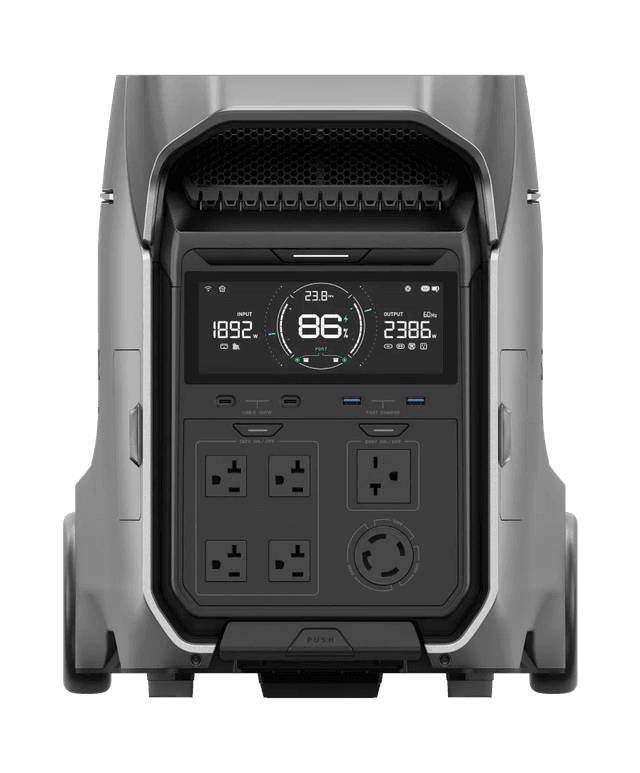
- 1 EcoFlow DELTA Pro 3 EcoFlow · US 120 V 4,000 W continuous · 8,000 W surge ceiling 4,096 Wh nameplate · Official spec · verified 2026-08-01 Tight fit33%
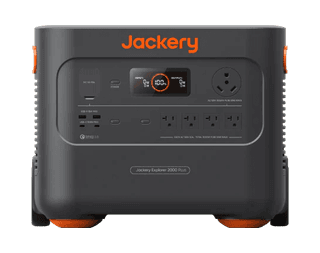
- 2 Jackery Explorer 2000 Plus Jackery · US 120 V 3,000 W continuous · 6,000 W surge ceiling 2,042.8 Wh nameplate · Official spec · verified 2026-08-01 Too big130% of surge ceiling
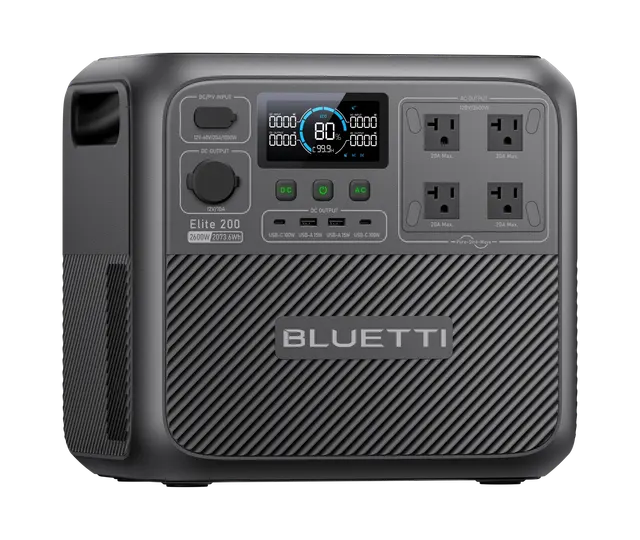
- 3 BLUETTI Elite 200 V2 BLUETTI · US 120 V 2,600 W continuous 2,073.6 Wh nameplate · Official spec · verified 2026-08-01 Too big300% of assumed surge ceiling
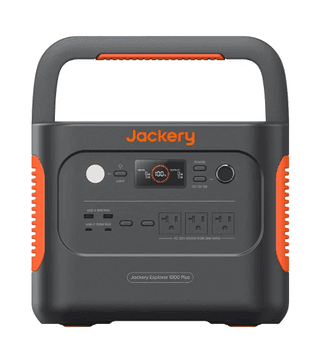
- 4 Jackery Explorer 1000 Plus Jackery · US 120 V 2,000 W continuous · 4,000 W surge ceiling 1,264.6 Wh nameplate · Official spec · verified 2026-08-01 Too big195% of surge ceiling
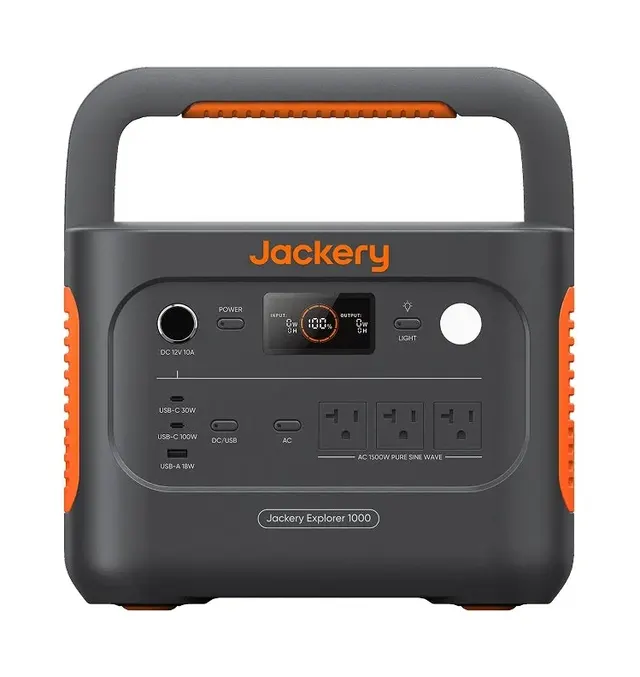
- 5 Jackery Explorer 1000 v2 Jackery · US 120 V 1,500 W continuous · 3,000 W surge ceiling 1,070 Wh nameplate · Official spec · verified 2026-08-01 Too big260% of surge ceiling
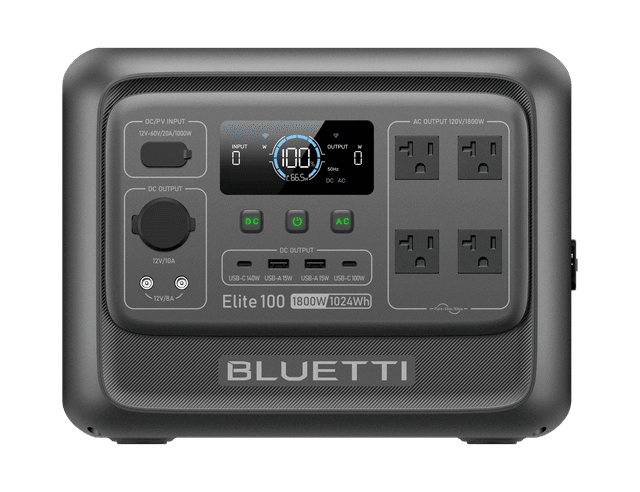
- 6 BLUETTI Elite 100 V2 BLUETTI · US 120 V 1,800 W continuous · 3,600 W surge ceiling 1,024 Wh nameplate · Official spec · verified 2026-08-01 Too big217% of surge ceiling
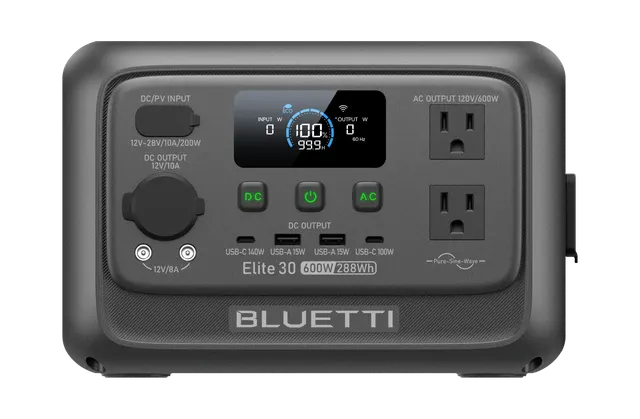
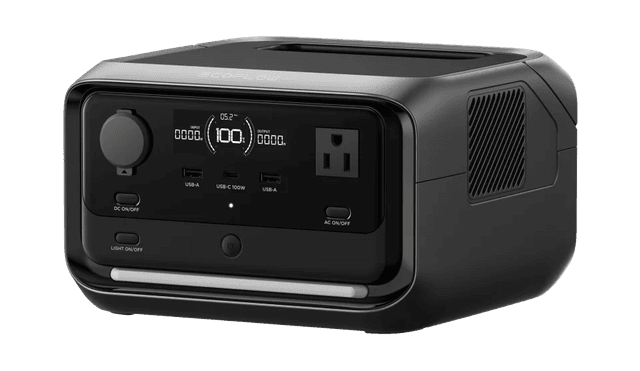
- 7 BLUETTI Elite 30 V2 BLUETTI · US 120 V 600 W continuous 288 Wh nameplate · Official spec · verified 2026-08-01 Too big217%
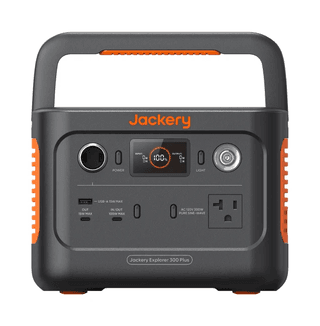
- 8 Jackery Explorer 300 Plus Jackery · US 120 V 300 W continuous · 600 W surge ceiling 288 Wh nameplate · Official spec · verified 2026-08-01 Too big433%
- 9 EcoFlow RIVER 3 Plus EcoFlow · US 120 V 600 W continuous · 1,200 W surge ceiling 286 Wh nameplate · Official spec · verified 2026-08-01 Too big217%
-
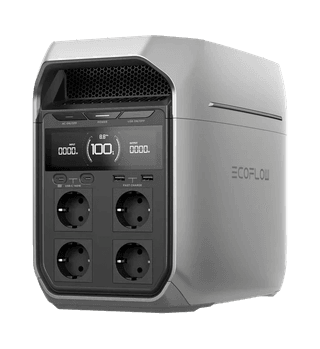
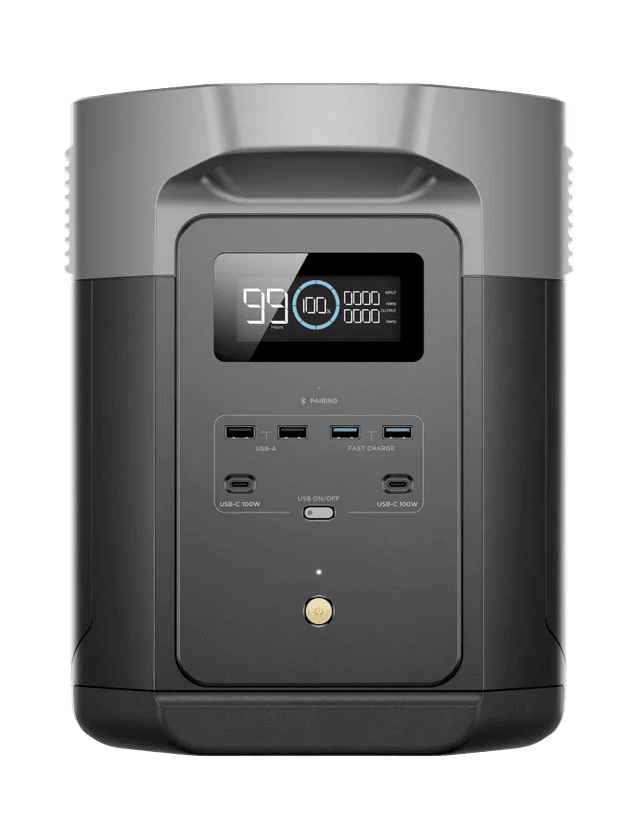
Photo shows the EU 230V version — page specs are US 120V. 10 EcoFlow DELTA 3 Plus EcoFlow · US 120 V 1,800 W continuous · 3,600 W surge ceiling 1,024 Wh nameplate · Official spec · verified 2026-08-01 Too big217% of surge ceiling - 11 EcoFlow DELTA 2 Max EcoFlow · US 120 V 2,400 W continuous · 4,800 W surge ceiling 2,048 Wh nameplate · Official spec · verified 2026-08-01 Too big163% of surge ceiling
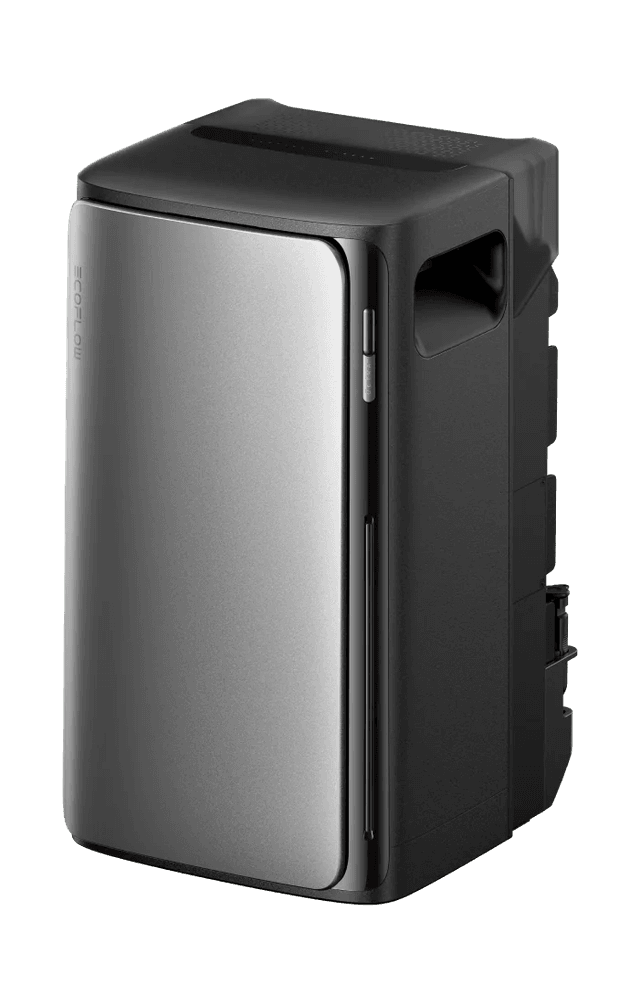
- 12 EcoFlow STREAM Ultra EcoFlow · US 120 V 800 W continuous 1,920 Wh nameplate · Official spec · verified 2026-08-01 Too big163%
Why 1 record carries no printable runtime
1 of the 12 records here starts and holds this load set and still carries no runtime this page will print, for one reason: we have found no depth of discharge and no inverter efficiency published by EcoFlow for it, so the hours a reader actually wants cannot be computed from anything but the number on the box — and dividing a nameplate by a load is the one thing this site will not do. The other side of that is BLUETTI and Jackery: they are the only brands here that publish both, which is the whole reason every proven runtime above belongs to them. The rule rewarded disclosure, not hardware.
What their rows do carry is the bound: that record’s nameplate over this set’s average draw of 1,170 W, which is arithmetic anyone can redo against the summary above — floored, never rounded up, so the printed ceiling never claims an hour more than the number supports — and it is printed on every one of those rows. But it is a ceiling and not a duration: it assumes the pack surrenders every watt-hour printed on it and that the inverter loses nothing turning DC into AC, and no battery does either. The real hours sit somewhere below that ceiling, and the two missing figures are exactly what would say how far below. That is the difference between a number this page will print and a number it will not.
The scope of that finding, stated: as of 2026-08-08 we read each manufacturer’s own published documents for these 1 models and found no depth-of-discharge and no inverter-efficiency figure in them. It is a statement about what those documents contained on that date — not a claim that the number exists nowhere. Send us one that is published and the record moves, and the row moves with it. Two counts are in play on this page and both are right: for 5 of the 12 records in this pool we have found neither figure published, which is the number the summary above is the other side of, and the 1 named here is the one that got far enough up the ranking for it to cost it a position. This is a statement about published data, not about the hardware — the verdict column judges that separately, and it comes first.
The load that changes the answer
Add a full-size refrigerator to the same set and the first gate, which was already refusing every record here, goes on refusing them: not one of the 12 clears it outright — 1 is a tight fit and 11 cannot do it at all. The reason is one instant: a full-size refrigerator asks for 286 W at start-up on its own — 5.2× its own running draw, against 7,800 W for everything on the list above put together. That start-up figure is a category envelope: we have found no published start-up rating for this unit itself. There is no “before” to contrast against here — nothing on this page clears the air conditioner on its own, so nothing can be taken away from it by a refrigerator. What would move this list is a different air conditioner, not a smaller set. The quiz carries this set as a preset.
start-up figure: Derived from official coefficients · verified 2026-08-01 · low confidence
The other rankings
Where to go next
Questions people ask about this list
How many of the 12 actually run it?
Is a 14,000 BTU portable unit really 14,000 BTU?
Pricing, ranking and how the site is funded are not questions about this list — they are the same on every page here, and they are set out in full in the price policy and how the money works.